Electric gates offer security, privacy, and daily convenience — but they are also powered machinery capable of causing serious injury if installed without appropriate safety measures. Understanding what safety devices do, and why they are required, helps you evaluate quotations and ensure your installation protects everyone who uses your driveway.
This is not alarmist. Modern gate automation, properly specified and maintained, is safe and reliable. The problems arise when safety equipment is omitted, incorrectly positioned, or disabled after installation.
Why safety matters on domestic gates
Automated gates move under motor power, often weighing hundreds of kilograms. They operate in an environment shared by vehicles, pedestrians, children, pets, and delivery drivers — many of whom may not expect a gate to begin moving.
UK gate safety standards — including BS EN 12453 and BS EN 12604 — set requirements for force limitation, obstacle detection, and the prevention of entrapment in crushing zones. Professional electric gate installation must comply with these standards. Installations that do not are not merely substandard; they create genuine liability for the property owner.
Essential safety devices
Photocells (light beams)
Photocells create an invisible beam across the gate opening. If the beam is broken while the gate is closing, it stops and reverses. They are the primary protection against a person or vehicle being struck by a closing gate.
Photocells must be positioned to cover the full opening height and adjusted so they cannot be easily bypassed. On swing gate installation projects, cell placement must account for the gate arc; on sliding gate systems, they protect the full width of the travel path.
Obstacle detection and safety edges
Beyond photocells, gates should detect obstacles through force limitation — the motor stops and reverses when it encounters resistance above a defined threshold — and/or pressure-sensitive safety edges mounted on leading edges where crushing could occur.
Safety edges are particularly important on gate leaves where photocell coverage may have blind spots, such as the hinge side of swing gates or the trailing edge of sliding gates.
Safe operating forces
Motors must be configured so that the force exerted during the final 500 millimetres of travel (the crushing zone) does not exceed safe limits. This is tested during commissioning and should be documented as part of the handover.
Manual release
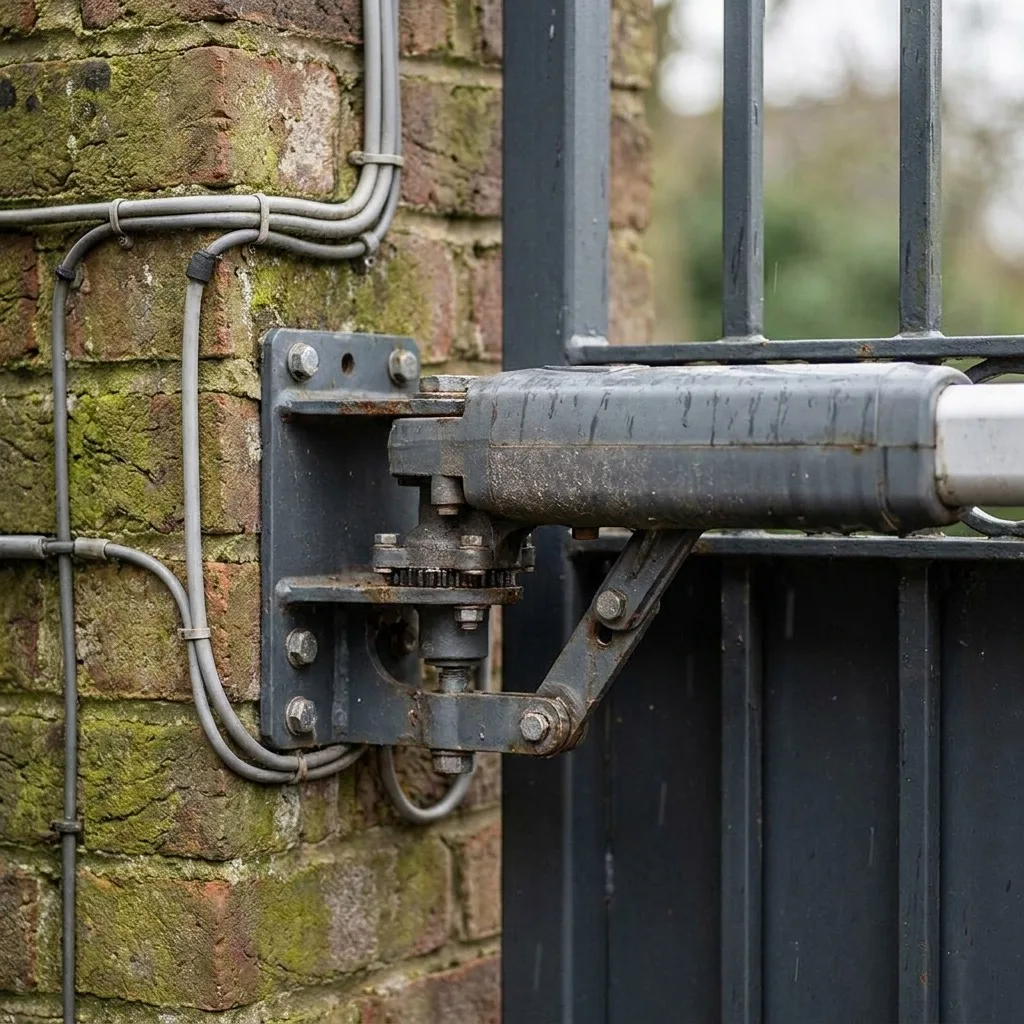
In a power failure, gates must be releasable manually so they can be moved without motor power. The release mechanism should be accessible to authorised users and explained clearly at handover.
Common safety failures
We encounter these issues on gates we are called to assess or repair:
- Missing or bypassed photocells — Sometimes removed because they were “triggered too often” by vegetation or poor alignment. The correct response is repositioning, not removal.
- Incorrect force settings — Motors set too aggressively, overriding obstacle detection.
- No safety edges on high-risk points — Particularly on older installations predating current standards.
- DIY automation kits — Retail motor kits fitted without professional safety assessment or commissioning.
If your existing gates were automated without a full safety package, a review is worthwhile. Our gate automation repairs service includes safety audits and upgrades.
Safety and access control
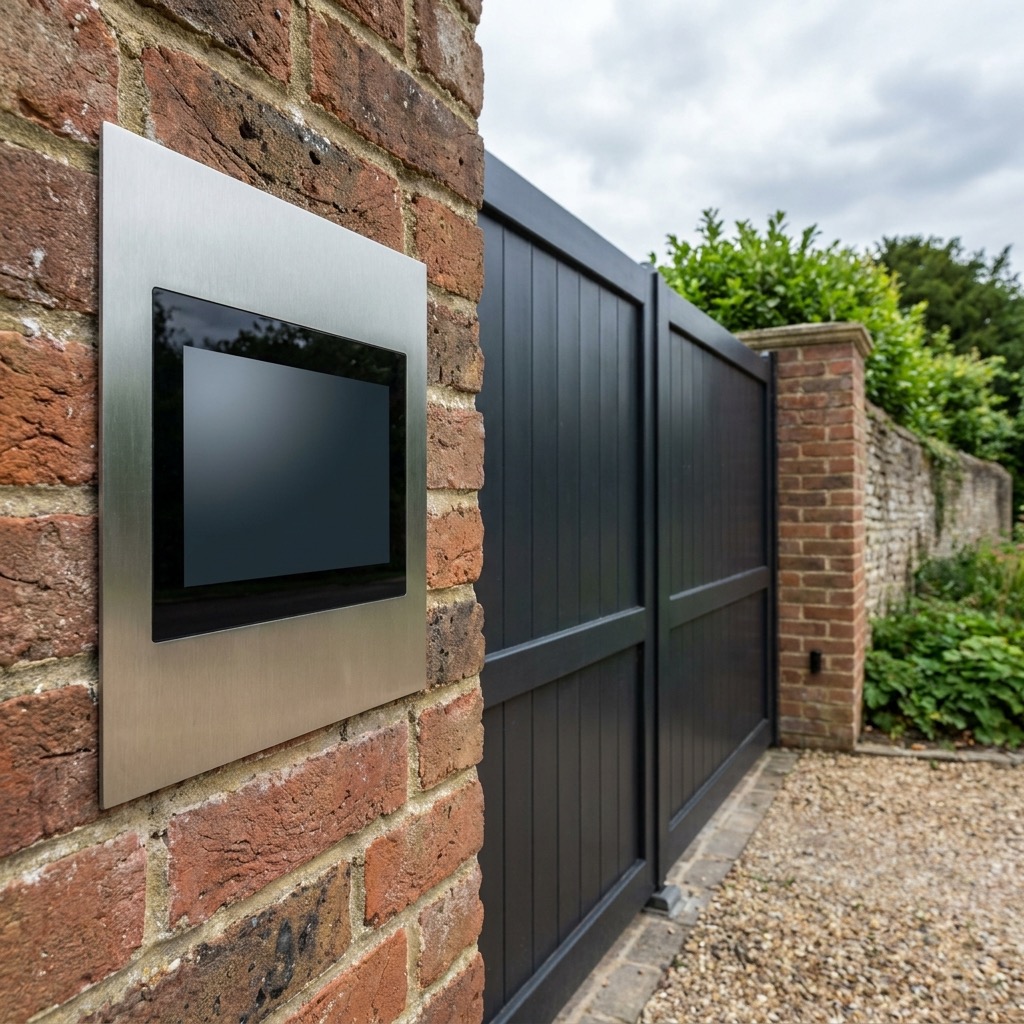
Safety devices and access control and intercom systems work together. A visitor calling via intercom should not be able to trigger gate movement until the area is confirmed clear. Integration between access control logic and safety circuits prevents gates from closing on someone still in the opening.
For properties receiving regular deliveries or visitors — common across Hertfordshire — this integration is particularly valuable.
Maintenance keeps safety active
Safety devices require periodic checking:
- Photocell alignment — Bumped posts, settling ground, or overgrown planting can misalign beams.
- Safety edge function — Edges should trigger a stop-and-reverse when pressed; test periodically.
- Force testing — Motor force settings should be verified during annual servicing.
- Control board diagnostics — Modern boards log fault events that indicate developing safety issues.
A gate that worked safely at installation can become hazardous if safety equipment degrades unnoticed. Regular servicing is part of responsible ownership, not an optional extra.
Safety devices are not a premium upgrade. They are the minimum standard for any automated gate on a domestic driveway.
What to expect from a professional installation
A responsible installer will:
- Conduct a risk assessment of the opening and surrounding area
- Specify appropriate safety devices for the gate type and usage
- Position and commission all devices before handover
- Test force limitation and obstacle detection under load
- Provide documentation of the safety configuration
- Explain manual release and emergency procedures
If a quotation omits safety devices or lists them as optional extras, treat that as a significant red flag. Our electric gate cost guide explains how safety equipment fits within a proper specification.
Planning safety from the start
Safety is easiest to design in at the planning stage. Gate type, post positions, and access control layout all affect where devices are mounted and how effectively they protect the opening.
When planning electric gates in Hertfordshire, raise safety questions early. A well-planned installation avoids the retrofit problems that arise when safety is treated as an afterthought.
Book a safety-conscious site survey
Whether you are installing new automatic driveway gates or reviewing an existing system, we assess safety as standard. Request a free site survey at your Hertfordshire property — we will recommend a compliant specification and explain exactly how your gates will protect the people who use them.