Electric gates that only open from inside your car are convenient for the household — but most driveways also receive visitors, deliveries, tradespeople, and occasional guests. Access control is what makes automated gates work for everyone who legitimately needs entry, without compromising security.
The right system depends on how your household uses the gates, how often you receive visitors, and whether you want to manage access remotely. This guide walks through the main options and how they integrate with a complete electric gate installation.
Remote controls and fobs
The simplest access method. Handheld remotes or key fobs transmit a coded signal to the gate receiver, triggering opening and closing.
Best for: Daily use by household members and regular drivers.
Considerations:
- Most systems support multiple fobs; additional fobs are inexpensive
- Rolling-code encryption prevents signal cloning on quality systems
- Fobs are easily lost — consider how you will de-authorise a missing fob
- Remotes alone do not help visitors waiting at the gate
Remote access is standard on virtually every automatic driveway gates installation. It forms the baseline; other methods layer on top.
Keypads and PIN codes
A wall-mounted keypad beside the gate allows entry via a numeric code. Codes can often be assigned individually and revoked without affecting other users.
Best for: Regular visitors who do not need a fob — cleaners, family members without a remote, occasional guests given a temporary code.
Considerations:
- Codes can be shared unintentionally; change them periodically
- Weather-rated keypads are essential for outdoor mounting
- Backlit keypads improve usability after dark
- Combine with intercom for visitors who do not have a code
Keypads suit properties across Hertfordshire where a steady flow of authorised visitors makes fob distribution impractical.
Video intercom systems
A video intercom at the gate lets you see and speak with visitors before granting access. Indoor monitors, smartphone apps, or both display the caller and allow you to open the gate remotely.
Best for: Properties where security and visitor screening matter — you want to know who is at the gate before it opens.
Considerations:
- Hardwired systems offer reliability; wireless options simplify retrofitting
- Smartphone integration allows gate control when you are away from home
- Camera quality varies; HD with night vision is worth the modest premium
- Integration with access control and intercom systems should include safety interlocks so gates cannot close on a visitor
Video intercom is increasingly popular on Hertfordshire properties, particularly in St Albans and other towns where front entrances face the street and visual verification adds genuine peace of mind.
Smartphone and app-based access
Modern control boards support Wi-Fi or GSM connectivity, enabling gate operation via smartphone app regardless of your location. Some systems also send notifications when gates open or remain open beyond a set time.
Best for: Homeowners who travel, manage multiple properties, or want audit trails of gate activity.
Considerations:
- Requires stable network connectivity at the gate location
- App ecosystems vary in quality; choose systems with established platforms
- Remote access should always respect safety device status — gates must not operate if photocells detect an obstruction
Combining methods
Most installations use a combination:
- Household members — Remotes or smartphone app
- Regular visitors — Keypad codes
- Unexpected callers — Video intercom with remote release
- Deliveries — Intercom or temporary codes
Layering methods avoids the weakness of any single approach. A visitor without a fob can use the intercom; a family member does not need to answer the intercom every time they arrive home.
Integration with gate type
Access control works with both swing gate installation and sliding gate systems. The control board and receiver are gate-type agnostic; what changes is the mounting location for keypads and intercom panels.
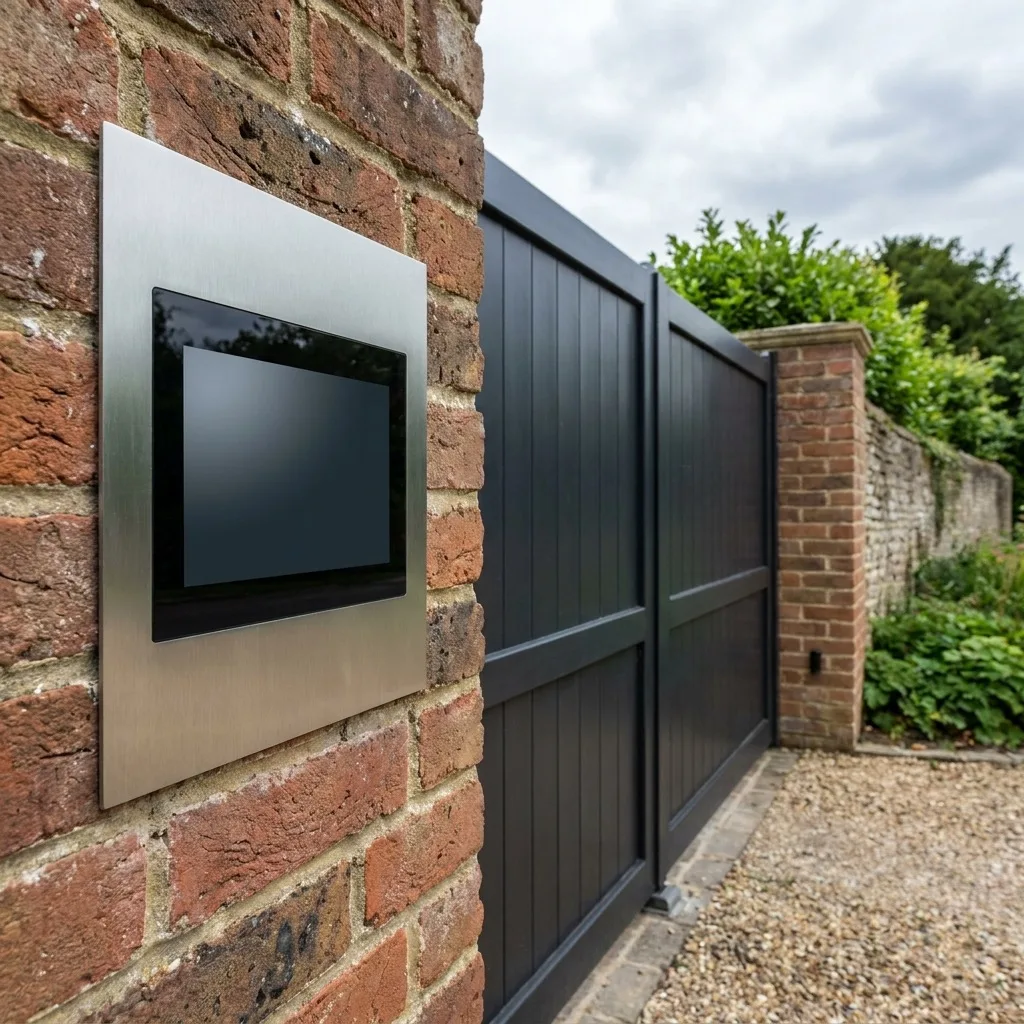
Post-mounted intercoms beside swing gates are the classic configuration. Sliding gates often suit wall-mounted panels on the property side of the opening. Your site survey will identify the best position for visibility, weather protection, and cable routing.
Safety integration
Access control must work with safety devices, not against them. When you release the gate via intercom or app, the system should verify that safety circuits are clear before movement begins. If photocells detect an obstruction, the gate must not close regardless of an access command.
This integration is standard on professional installations but absent on many DIY setups. Our guide to gate automation safety devices explains the safety side in detail.
Choosing the right level of access control
There is no single best system — only the best fit for your property:
| Usage pattern | Recommended approach |
|---|---|
| Single household, few visitors | Remotes + basic intercom |
| Regular trades and deliveries | Remotes + keypad + intercom |
| Security-conscious, frequent callers | Video intercom + smartphone |
| Remote property management | App-based control + activity logging |
Access control adds to project cost, but the increment is modest relative to the overall investment — typically within the £3,500–£18,000+ range for a complete Hertfordshire installation. Specifying it during planning electric gates avoids expensive retrofitting later.
Access control should match how you actually live — not how a catalogue assumes you live.
What a site survey covers
During a site survey, we discuss who uses your gates, how visitors typically arrive, and whether you want room to expand the system later. That conversation shapes the access control specification alongside gate type, materials, and safety devices.
For a detailed walkthrough of the survey process itself, see what to expect from a gate site survey.
Specify your access control with confidence
Request a free site survey and we will recommend an access control package integrated with your automatic driveway gates — designed for your household, your visitors, and your Hertfordshire property.